Published ·
Openresti Editorial Desk4 min read
Cloud Platforms Shift Toward Intelligent Automation
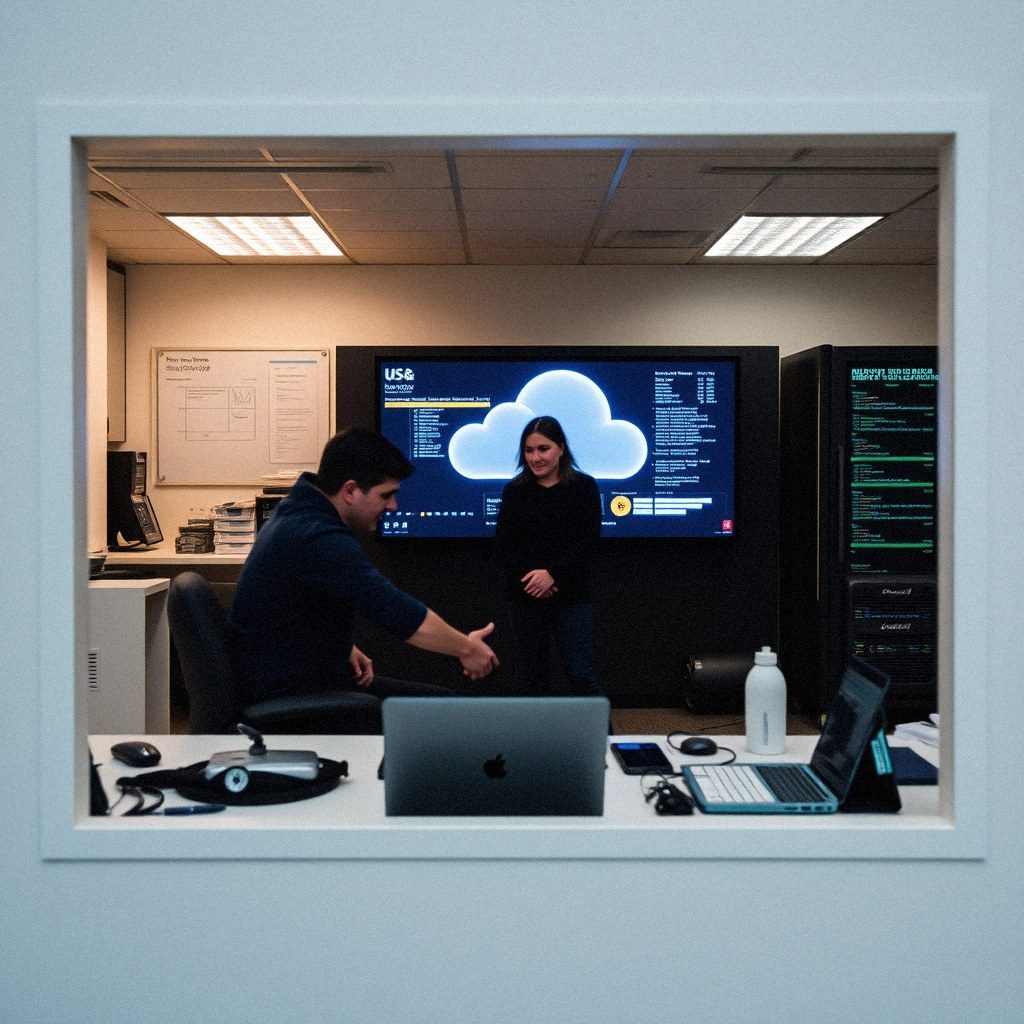
Recent updates from Google Cloud, AWS, Cloudflare, and Microsoft reveal a common push to embed AI-driven optimization, observability, and security into core infrastructure services, reducing manual overhead and accelerating performance.
Show article sections
The Rise of AI-Assisted Infrastructure Management
Across the cloud industry, a clear trend is emerging: infrastructure management is becoming increasingly automated and intelligent. Google Cloud's introduction of CPU startup boost for GKE pods addresses a long-standing challenge in Kubernetes environments—the tension between fast application startup and efficient resource utilization. By allowing pods to temporarily exceed their CPU limits during initialization, Google aims to reduce latency without requiring permanent over-provisioning.
Similarly, AWS's preview of the Well-Architected Agent signals a shift from static best-practice checklists to dynamic, AI-powered analysis. The agent not only identifies issues across cost, security, performance, and reliability but also correlates metrics and application topology to prioritize recommendations based on business goals. This represents a move toward continuous, context-aware optimization rather than periodic manual reviews.
These developments reflect a broader industry recognition that the complexity of modern cloud environments exceeds the capacity of manual management. AI and machine learning are being deployed to handle routine optimization tasks, freeing human engineers to focus on higher-level architecture and innovation.
Unified Observability as a Competitive Necessity
Cloudflare's announcement of eight major updates to its observability platform underscores the growing importance of integrated monitoring solutions. By bringing logs, traces, analytics, alerts, dashboards, querying, and telemetry export into a single platform, Cloudflare aims to simplify the operational burden on developers and SREs. The promise of simpler and more predictable pricing also addresses a common pain point: the unpredictable costs associated with observability tools.
The move toward unified observability is not merely a convenience; it is a strategic necessity in distributed systems. As applications span multiple clouds and edge locations, the ability to correlate data from various sources becomes critical for troubleshooting and performance optimization. Fragmented tooling leads to blind spots and slower incident resolution.
Cloudflare's approach suggests that the market is moving away from best-of-breed point solutions toward platforms that offer end-to-end visibility. This consolidation may pressure smaller observability vendors to differentiate or integrate more deeply with larger ecosystems.
Security in the Age of AI Agents
Microsoft's security announcements at Ignite 2026 highlight the expanding threat landscape as AI agents become more prevalent in enterprise environments. The company's emphasis on an 'AI-first, end-to-end security platform' indicates a recognition that traditional perimeter-based security models are insufficient. Protecting identities, devices, data, applications, clouds, infrastructure, and AI agents requires a holistic approach.
The integration of AI into security operations is a double-edged sword. While AI can enhance threat detection and response, it also introduces new attack vectors. Malicious actors may target AI models or use AI to automate attacks. Microsoft's focus on securing AI agents suggests that the industry is beginning to address these emerging risks.
As organizations adopt AI-driven tools for infrastructure management and observability, they must also ensure that these tools themselves are secure. The convergence of AI and security will likely lead to new frameworks and best practices for securing intelligent systems.

Implications for Developers and Operations Teams
For developers and operations teams, these developments promise significant productivity gains. Faster pod startup times on GKE can improve user experience and reduce the need for manual scaling interventions. AWS's Well-Architected Agent can accelerate architecture reviews and remediation by providing actionable, prioritized recommendations. Cloudflare's unified observability can reduce the time spent switching between tools and correlating data.
However, these benefits come with a learning curve. Teams will need to understand how to configure and trust AI-driven recommendations. There is also a risk of over-reliance on automation, which could lead to a decline in deep architectural understanding. Organizations should invest in training and maintain a balance between automation and human oversight.
The shift toward intelligent automation may also change the skill sets required for cloud roles. Familiarity with AI and machine learning concepts, as well as the ability to interpret AI-generated insights, will become increasingly valuable. The role of the cloud engineer is evolving from manual operator to strategic overseer of automated systems.
The Broader Market Trajectory
The announcements from Google, AWS, Cloudflare, and Microsoft are not isolated events; they represent a coordinated industry movement toward more intelligent, automated, and integrated cloud platforms. Each provider is leveraging AI to differentiate its offerings and address customer pain points around performance, cost, security, and operational complexity.
This trend is likely to accelerate as competition intensifies. Smaller cloud providers and independent software vendors may struggle to keep pace with the AI capabilities of hyperscalers. Partnerships and acquisitions may become more common as companies seek to bolster their AI and observability portfolios.
For enterprises, the key takeaway is that cloud infrastructure is becoming smarter and more autonomous. Evaluating cloud providers should now include an assessment of their AI-driven optimization, observability, and security capabilities. The ability to leverage these intelligent features may become a significant factor in achieving operational excellence and competitive advantage.

Your turn
What did you take from this analysis?
Mark what worked, save it for later or share it with someone who would value the context.
Openresti / Sources
Sources and further reading
- Google Cloud Blog: GKE CPU startup boost: Accelerate app starts without over-provisioning
- AWS What's New: AWS Well-Architected Agent is now available in preview
- Cloudflare Blog: 8 major updates to Cloudflare Observability
- Microsoft Security Blog: Secure what’s next: Your guide to Microsoft Security at Microsoft Ignite 2026
Related analysis

Cloud-Native Control: Autoscaling, Compliance, Security, and Preview Isolation
Recent cloud updates show a shift toward finer-grained control: GKE's PromQL autoscaling, AWS FedRAMP Class C for VMware, OpenAI's cyber defense for Ukraine, and Cloudflare's isolated previews.…
Back to all stories
Enterprise AI Infrastructure: Memory, Speed, and the New Bottleneck
Recent cloud announcements highlight a shift from raw compute to memory and state management for enterprise AI. Faster snapshots, institutional memory for agents, and memory-optimized instances point to a common challenge: making AI workloads responsive and cost-effective at scale.
Back to all stories
Cybersecurity in Practice: From Kernel Exploits to Scoped Access
Recent security updates from CISA, Microsoft, and AWS highlight a shift toward risk-based prioritization, measurable email defenses, and dynamic access control. These separate developments share a common thread: organizations need practical, layered security that adapts to evolving threats without…
Back to all stories